Because this was a relatively small conference I will keep it brief.
I spent much of this past week in Wilmington NC attending the 35th Annual Larval Fish Conference. I had a great time Wilmington is a great city and the conference was very interesting. Early life history is my primary interest so I was pretty interested in most of the talks. There were a few talks focusing on otolith microchemistry as a means of tracking a shift to the marine environment by salmon and striped bass. These were interesting but I had seen the striped bass talk previously.
There were also a few talks about modeling larval dispersal which I though was really cool. I don't know what it is but projects combining biological data with physical data really grab my attention. There were a few talks about eco-morphology and ontogenetic shifts in juvenile fish. Most of these talks focused on the development of the jaw and all have come up with some interesting results.
There was a section on maturation, fecundity and egg development, which was interesting but seemed repetitive after a certain point. What I did find interesting was a talk about the influence of maternal diet on the success of offspring. This was tested with an experiment known as the "larval olympics" which is something I was familiar with from previous work but it was cool to see it brought up again.
There were a lot of talks focused on the match mismatch hypothesis, and there was a special section on cephalopod early life history. While I have no real interest in cephalopods it was interesting to see what other people are working on, and really larval cephalopods aren't really that different from larval fish.
I liked the conference, I learned a lot. I maybe didn't get as much feedback on my project as I would have liked but whatever. The people I talked to at the very least seemed interested. I think there were people from something like 14 different countries and 20 different states so it was great to see what people around the world are working on.
Now if I can only find a way to go to the conference next year when it is in Norway.
Sunday, May 29, 2011

Saturday, May 21, 2011
Quickly
Just a quick update on what I have been doing.
I've been polishing and reading juvenile river herring otoliths for most of the last two weeks, or at least since the last time I posted anything. At some point I will post pictures and give a write up of the method with some suggestions about how to go about working with tiny river herring otoliths.
This week I will be attending the 35th Annual Larval Fish Conference being held in Wilmington NC. I'm really looking forward to it, I have never been to Wilmington and I hear it's awesome. Also, my primary fisheries interest is early life history so the conference is right up my alley. I am presenting a poster at the conference so if you are there check it out. I may try to post something while in Wilmington, but if I cannot I will recap the event in retrospect.
In the meantime check out this site created by students in the lab of Dr. Anthony Overton dedicated to their work on larval river herring in the Chowan River. The site is pretty new but it already has a lot of interesting content. Enjoy!
I've been polishing and reading juvenile river herring otoliths for most of the last two weeks, or at least since the last time I posted anything. At some point I will post pictures and give a write up of the method with some suggestions about how to go about working with tiny river herring otoliths.
This week I will be attending the 35th Annual Larval Fish Conference being held in Wilmington NC. I'm really looking forward to it, I have never been to Wilmington and I hear it's awesome. Also, my primary fisheries interest is early life history so the conference is right up my alley. I am presenting a poster at the conference so if you are there check it out. I may try to post something while in Wilmington, but if I cannot I will recap the event in retrospect.
In the meantime check out this site created by students in the lab of Dr. Anthony Overton dedicated to their work on larval river herring in the Chowan River. The site is pretty new but it already has a lot of interesting content. Enjoy!
Wednesday, May 11, 2011
Clean Water?
A few quick updates.
Smoke from a forest fire in the Outer Banks is settling over Greenville this morning giving the city the unmistakeable scent of a camp fire, which isn't so bad, I just hope there is minimal damage to Outer Banks communities from the actual fire.
While I was thinking about camping, roasting marshmallows, and traveling to Wisconsin tomorrow I came across this article regarding my second (maybe third) favorite state. The article is about the Wisconsin assembly rejecting requirements for communities to disinfect drinking water.
I'm not sure how to feel about this.
At first I was shocked, I thought most tap water was disinfected. Then I remembered growing up with people who used well water, which was definitely untreated. Also, the city of Syracuse (where I lived for 4 years as an undergraduate) does disinfect the water it obtains from Skaneateles Lake with chlorine, but because Skaneateles Lake is one of the cleanest lakes in the world the city is not required to filter the water.
According to the article untreated water in Wisconsin was found to contain viruses and communities with high concentrations of viruses in their water have high rates of illness. Of course the bill was rejected by republicans who felt that treating water would be to costly. But, while initial costs of treatment would be high there would be long term healthcare savings according to researcher Mark Borchardt.
I'm torn. I believe that EVERYONE has the right to clean water. However, I think if water has been rigorously tested and it's clean why treat it? The only solution is probably long term monitoring of water quality, which may be more costly and at some point it may be cheaper just to treat the water. I do think it's shocking that clean water and the health of the states citizens would even be debated, especially with strong evidence demonstrating the risks of untreated water. It seems like a question with a clear, obvious answer. Doesn't it?
As far as otoliths are concerned, I am attempting to grind and polish juvenile river herring otoliths in hopes of counting daily growth rings. Hopefully there will be pictures to come...
Smoke from a forest fire in the Outer Banks is settling over Greenville this morning giving the city the unmistakeable scent of a camp fire, which isn't so bad, I just hope there is minimal damage to Outer Banks communities from the actual fire.
While I was thinking about camping, roasting marshmallows, and traveling to Wisconsin tomorrow I came across this article regarding my second (maybe third) favorite state. The article is about the Wisconsin assembly rejecting requirements for communities to disinfect drinking water.
I'm not sure how to feel about this.
At first I was shocked, I thought most tap water was disinfected. Then I remembered growing up with people who used well water, which was definitely untreated. Also, the city of Syracuse (where I lived for 4 years as an undergraduate) does disinfect the water it obtains from Skaneateles Lake with chlorine, but because Skaneateles Lake is one of the cleanest lakes in the world the city is not required to filter the water.
According to the article untreated water in Wisconsin was found to contain viruses and communities with high concentrations of viruses in their water have high rates of illness. Of course the bill was rejected by republicans who felt that treating water would be to costly. But, while initial costs of treatment would be high there would be long term healthcare savings according to researcher Mark Borchardt.
I'm torn. I believe that EVERYONE has the right to clean water. However, I think if water has been rigorously tested and it's clean why treat it? The only solution is probably long term monitoring of water quality, which may be more costly and at some point it may be cheaper just to treat the water. I do think it's shocking that clean water and the health of the states citizens would even be debated, especially with strong evidence demonstrating the risks of untreated water. It seems like a question with a clear, obvious answer. Doesn't it?
As far as otoliths are concerned, I am attempting to grind and polish juvenile river herring otoliths in hopes of counting daily growth rings. Hopefully there will be pictures to come...
Monday, May 2, 2011
Manganese as a Recorder of Hypoxia

I haven't been doing much writing about otoliths lately (at least not here), despite the goal of this blog being to write about otoliths. In fact, recently I have been writing more about invasive species, which is a topic I absolutely hate!
Really the only excuse I can come up with for not writing about otoliths is laziness. I wanted to write about otoliths, I really did, I just needed some inspiration...which came in the form of some current events. My interest was peaked when I read the title; "Research: Fish Can Detect And Record Marine 'Dead Zones'". Fish you say? Record you say? All the key words were there, this definitely had to be about otoliths...and it was...inspiration at last!
So I dug deeper and found the paper the article was reporting on, by Limburg et al. (2011) entitled Tracking Baltic hypoxia and cod migration over millennia with natural tags.
The paper focuses on hypoxia and declines in cod stocks in the Baltic Sea. Along with over fishing, habitat degradation is hypothesized to have led to declines of cod in the Baltic Sea. The Baltic Sea experiences natural and anthropogenic caused hypoxia events (depleted oxygen), which is thought to have a negative impact on fish.
During hypoxic events manganese is released from the sediment into the water. Once in the water it is free to be incorporated into fish otoliths. The researchers used the concentrations of Mn in cod otoliths, from the Neolithic Age, the Iron Age, the 1980's, the early 1990's and the late 1990's, to examine hypoxia events in the Baltic Sea. It's pretty awesome in and of itself that otoliths from the Neolithic and Iron Ages can be found, but to analyze them and get meaningful data is pretty mind blowing, and can certainly be used when investigating changes in the environment throughout time.
The pattern of Mn in the otoliths followed what one would expect. The Neolithic otoliths had low Mn, and otoliths from the late 1990's had the highest concentrations of Mn. The increasing Mn throughout time indicates that hypoxc events are more frequent now than in the past, likely due to anthropogenic impacts.
For me, the most interesting finding was that elevated Mn was found in areas of the otolith relating to early years of life, particularly the first year. Using Ba/Sr ratios (used to differentiate freshwater and salt water) in these otoliths, it was hypothesized these fish utilize low salinity areas with riverine inputs as nursery grounds. These areas may be exposed to low oxygen conditions, thus having higher Mn concentrations.
So what does this tell us?
If the modern fish were captured alive (which I'm assuming they were), it could be concluded that young fish are able to cope with hypoxic events. It is possible there is some advantage gained by young fish being able to tolerate hypoxic conditions. Young cod may enter hypoxic waters to avoid predation or avoid competition for food resources (I'm pretty sure this concept has been demonstrated with common snook, but I was unable to locate a reference). It would be interesting to examine growth rates and condition of juvenile cod exposed to different oxygen levels, in order to investigate differences in habitat quality. However, the researchers did note that Mn in the water can linger after hypoxic events, so Mn in the otolith does not necessarily mean the fish was directly exposed to hypoxia.
Using Mn in otoliths to examine and record hypoxia is interesting to say the least, and this paper provides a specific example of the record keeping ability of otoliths. I haven't really noticed any trends with Mn in my own research yet, but I think as I look at data from later in the summer (August-October) it may start to show up in water samples and otoliths because of low oxygen levels in the water during this time period.
Limburg KE, Olson C, Walther Y, Dale D, Slomp CP, & Høie H (2011). PNAS Plus: Tracking Baltic hypoxia and cod migration over millennia with natural tags. Proceedings of the National Academy of Sciences of the United States of America PMID: 21518871
Wednesday, April 27, 2011
Fighting Back
Having worked on the Great Lakes for a decent chunk of my young career I am all to familiar with invasive species and the devastating effects they can have on an ecosystem. Unfortunately most of the news concerning invasive species is negative and in systems like the Great Lakes it seems as though someone left the front door open for invasive species to swim on in. In fact, it's probably one of the major reasons I wanted to moved on from working on the Great Lakes. Invasive species are depressing and the situation never seems to improve. That is not to say the marine environment doesn't have its own invasive species problems, as we've seen from the invasion of lionfish.
But the news isn't all bad.
It seems as though Lake George in New York has had success in turning back invasive species. When Asian clams were discovered in the lake scientists quickly mobilized to eradicate the threat. The location of the clams in the lake was identified, and mats are being laid over the top to "snuff" out the tiny invaders.
 But it doesn't end there.
Lake George has had past success in avoiding invasive species. Eurasian watermilfoil has been contained in the lake using barriers, and zebra mussels were wiped out by volunteer divers who picked them off of rocks. It's pretty incredible when you think about it.
Granted Lake George is a smaller system so it is probably easier to contain and eradicate invasive species than in larger systems. However, I think it speaks to the importance of long term monitoring and having proactive user groups that these threats were quickly identified and dealt with. Hopefully Lake George has the same success with the Asian Clam.
But the news isn't all bad.
It seems as though Lake George in New York has had success in turning back invasive species. When Asian clams were discovered in the lake scientists quickly mobilized to eradicate the threat. The location of the clams in the lake was identified, and mats are being laid over the top to "snuff" out the tiny invaders.

Lake George has had past success in avoiding invasive species. Eurasian watermilfoil has been contained in the lake using barriers, and zebra mussels were wiped out by volunteer divers who picked them off of rocks. It's pretty incredible when you think about it.
Granted Lake George is a smaller system so it is probably easier to contain and eradicate invasive species than in larger systems. However, I think it speaks to the importance of long term monitoring and having proactive user groups that these threats were quickly identified and dealt with. Hopefully Lake George has the same success with the Asian Clam.
Friday, April 15, 2011
Phosphorus in Wisconsin
I was reading a post at the Sierra Clubs Great Lakes Program blog and found the reference to this article about Wisconsin potentially allowing increased phosphorous releases into state waters pretty interesting. I'll briefly explain the political issues (as far as I can understand them) before getting into the science but you should definitely read the article for yourself.
For those following the Wisconsin budget situation, it is common knowledge that Wisconsin Gov. Scott Walker is heavily backed by the Koch brothers, the libertarian billionaires known for their philanthropy and support of the tea party "movement". The brothers own most of Koch industries which encompasses Georgia Pacific lumber which has paper mills in Wisconsin. Phosphorus is one of the by products produced by these plants, the phosphorus is usually disposed of by discharging into nearby waterbodies. Essentially, Scott Walker and his colleagues have been working to delay legislation that would limit phosphorus emissions, presumably with the goal of getting rid of this legislation all together. Many questions have arisen about Walkers motives because the Koch brothers back Walker and have a lot to gain if Walker is successful in delaying this legislation (read the article for more detail).
So why should we care if more phosphorus is added to the environment?
Primary production is the conversion of the suns energy to organic material, usually by photosynthesis. In addition to sunlight, phosphorus and nitrogen are needed for primary production. In freshwater environments phosphorus is a limiting element. This means that regardless of the amount of nitrogen in the environment if there is not enough phosphorous primary production will be limited. In aquatic systems primary productivity can be viewed as algal and aquatic plant growth. The more phosphorous in the system the more plant growth we should see. Many freshwater systems have extra phosphorous added to them from outside sources (like paper plants), which increases primary productivity, this is known as eutrophication.
That's good right? We want more primary productivity don't we? Zooplankton eat algae and fish eat zooplakton. If there is more algae we get more zooplankton and more fish...Right? This is somewhat true (see Onondaga Lake and Lake Erie), eutrophic lakes (whether it's natural or artificial eutrophication) seem to support a lot life.
But there are plenty of negatives.
Increased primary production can lead to visible algal and vegetation mats in the water that can emit odors and are just plain unsightly and can be a nuisance to boaters, swimmers, fishermen and other recreational users.
 From a fisheries perspective eutrophication can lead to fish kills. At night algal respiration can use up dissolved oxygen in the water, which decreases the amount that can be used by fish, and other organisms. Also, oxygen is used by microbes that break down dead algae and plants on the bottom of rivers and lakes, this can cause reduced oxygen in locations.

It's pretty clear that eutrophication can have some devastating effects on the environment, and that eutrophication can be caused by increased phosphorus input. While many restrictions have been put on what can be dumped into waterways, it seems like we are constantly on the brink of these regulations being relaxed because it's "good for business". In the current political climate I am sure industry will lobby hard for relaxed environmental regulations in the name of progress, and if they don't get there way I would be willing to guess that layoffs will follow (gotta keep those profits up). It comes down to one simple question; Should private industries be able to pollute/destroy public resources so they can maintain higher profits?
I hope the answer is a resounding no.
For those following the Wisconsin budget situation, it is common knowledge that Wisconsin Gov. Scott Walker is heavily backed by the Koch brothers, the libertarian billionaires known for their philanthropy and support of the tea party "movement". The brothers own most of Koch industries which encompasses Georgia Pacific lumber which has paper mills in Wisconsin. Phosphorus is one of the by products produced by these plants, the phosphorus is usually disposed of by discharging into nearby waterbodies. Essentially, Scott Walker and his colleagues have been working to delay legislation that would limit phosphorus emissions, presumably with the goal of getting rid of this legislation all together. Many questions have arisen about Walkers motives because the Koch brothers back Walker and have a lot to gain if Walker is successful in delaying this legislation (read the article for more detail).
So why should we care if more phosphorus is added to the environment?
Primary production is the conversion of the suns energy to organic material, usually by photosynthesis. In addition to sunlight, phosphorus and nitrogen are needed for primary production. In freshwater environments phosphorus is a limiting element. This means that regardless of the amount of nitrogen in the environment if there is not enough phosphorous primary production will be limited. In aquatic systems primary productivity can be viewed as algal and aquatic plant growth. The more phosphorous in the system the more plant growth we should see. Many freshwater systems have extra phosphorous added to them from outside sources (like paper plants), which increases primary productivity, this is known as eutrophication.
That's good right? We want more primary productivity don't we? Zooplankton eat algae and fish eat zooplakton. If there is more algae we get more zooplankton and more fish...Right? This is somewhat true (see Onondaga Lake and Lake Erie), eutrophic lakes (whether it's natural or artificial eutrophication) seem to support a lot life.
But there are plenty of negatives.
Increased primary production can lead to visible algal and vegetation mats in the water that can emit odors and are just plain unsightly and can be a nuisance to boaters, swimmers, fishermen and other recreational users.
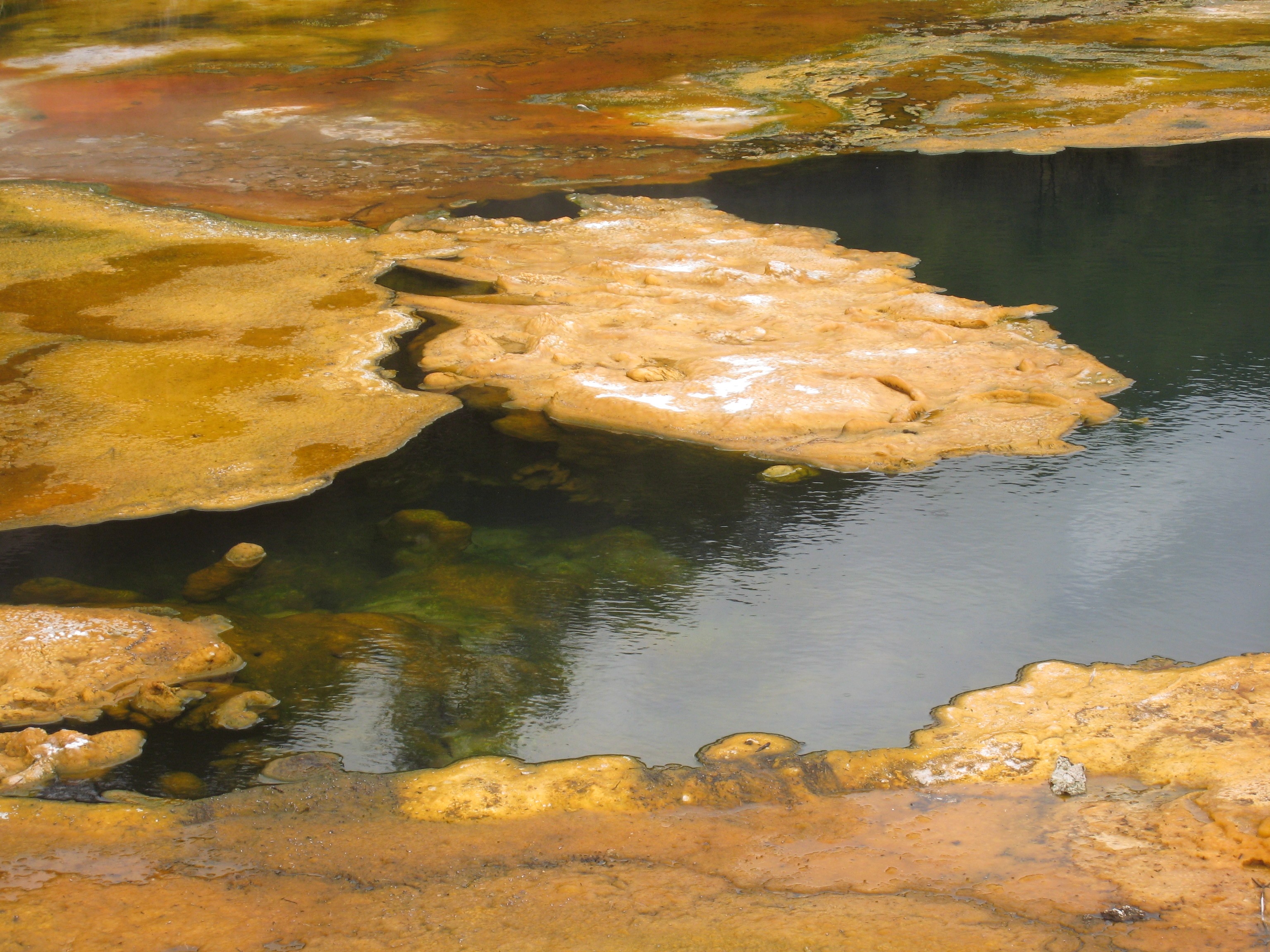

It's pretty clear that eutrophication can have some devastating effects on the environment, and that eutrophication can be caused by increased phosphorus input. While many restrictions have been put on what can be dumped into waterways, it seems like we are constantly on the brink of these regulations being relaxed because it's "good for business". In the current political climate I am sure industry will lobby hard for relaxed environmental regulations in the name of progress, and if they don't get there way I would be willing to guess that layoffs will follow (gotta keep those profits up). It comes down to one simple question; Should private industries be able to pollute/destroy public resources so they can maintain higher profits?
I hope the answer is a resounding no.
Tuesday, April 12, 2011
A little more on Carp
It's been a fairly busy/interesting/hectic/scary/informative couple of weeks; I wrote a statistics paper (lame!), I presented at our schools research and creative achievement week, I got a crash course in how to trouble shoot ICP-OES, Dr. Norman Halden, one of the worlds experts on mass spectrometry came for a visit, I defended my proposal (at long last), and had some fun with chemistry.
Needless to say I haven't posted anything in a while. However, I have been following some of the recent developments in the potential invasion of the Great Lakes by Asian carp.
Less than a week ago the army corps of engineers activated a new electric barrier on the Chicago sanitary and ship canal to deter the upstream movement of Asian carp into Lake Michigan. This brings the number of electric barriers on the canal to three. To my knowledge the original barrier was supposed to crap out around 2007 or 2008 but has kept on chugging, and I am sure repairs have been made since then. At the same time the original barrier was supposed to bite the dust a second barrier was being added just downstream of the first. The newest barrier is slightly downstream of the other two. The multi-barrier array allows for repairs to individual barriers and is a safe guard if for some reason fish are able to bypass one barrier. The barrier design works in this portion of the canal, because it is a relatively narrow section and the barriers can span the entire width.
While the barriers appear to work in preventing fish from moving upstream, they may not be as effective in preventing the movement of fish downstream. A fish moving downstream may become stunned by the electricity and simply drift with the current passed the electric barriers, waking up on the other side. Also, the Des Plaines river, which runs parallel to the canal may serve as a passage for Asian carp. During flooding events the Des Plaines River spills into the canal upstream of the electrical barriers.
Today, I read about anglers in Canada advocating permanently breaking the connection between the canal and Lake Michigan. While this may seem a extreme, I support this idea. Shipping traffic in the canal is not nearly what it used to be (at least that's what I'm told), and this seems to be the only way to prevent invasive species from naturally moving between the Mississippi River and the Great Lakes.
It's an interesting debate, and there are many stakeholders from multiple U.S. states and Canada. Many questions remain as to the best way to keep the carp out of the Great Lakes, whether they could actually survive in the lakes, and what impact they could have on the lakes. I am certainly interested in how this plays out.
Needless to say I haven't posted anything in a while. However, I have been following some of the recent developments in the potential invasion of the Great Lakes by Asian carp.
Less than a week ago the army corps of engineers activated a new electric barrier on the Chicago sanitary and ship canal to deter the upstream movement of Asian carp into Lake Michigan. This brings the number of electric barriers on the canal to three. To my knowledge the original barrier was supposed to crap out around 2007 or 2008 but has kept on chugging, and I am sure repairs have been made since then. At the same time the original barrier was supposed to bite the dust a second barrier was being added just downstream of the first. The newest barrier is slightly downstream of the other two. The multi-barrier array allows for repairs to individual barriers and is a safe guard if for some reason fish are able to bypass one barrier. The barrier design works in this portion of the canal, because it is a relatively narrow section and the barriers can span the entire width.
While the barriers appear to work in preventing fish from moving upstream, they may not be as effective in preventing the movement of fish downstream. A fish moving downstream may become stunned by the electricity and simply drift with the current passed the electric barriers, waking up on the other side. Also, the Des Plaines river, which runs parallel to the canal may serve as a passage for Asian carp. During flooding events the Des Plaines River spills into the canal upstream of the electrical barriers.
Today, I read about anglers in Canada advocating permanently breaking the connection between the canal and Lake Michigan. While this may seem a extreme, I support this idea. Shipping traffic in the canal is not nearly what it used to be (at least that's what I'm told), and this seems to be the only way to prevent invasive species from naturally moving between the Mississippi River and the Great Lakes.
It's an interesting debate, and there are many stakeholders from multiple U.S. states and Canada. Many questions remain as to the best way to keep the carp out of the Great Lakes, whether they could actually survive in the lakes, and what impact they could have on the lakes. I am certainly interested in how this plays out.
Subscribe to:
Posts (Atom)